

Car Key Stuck in Ignition? What To Do (And What Not To Do)
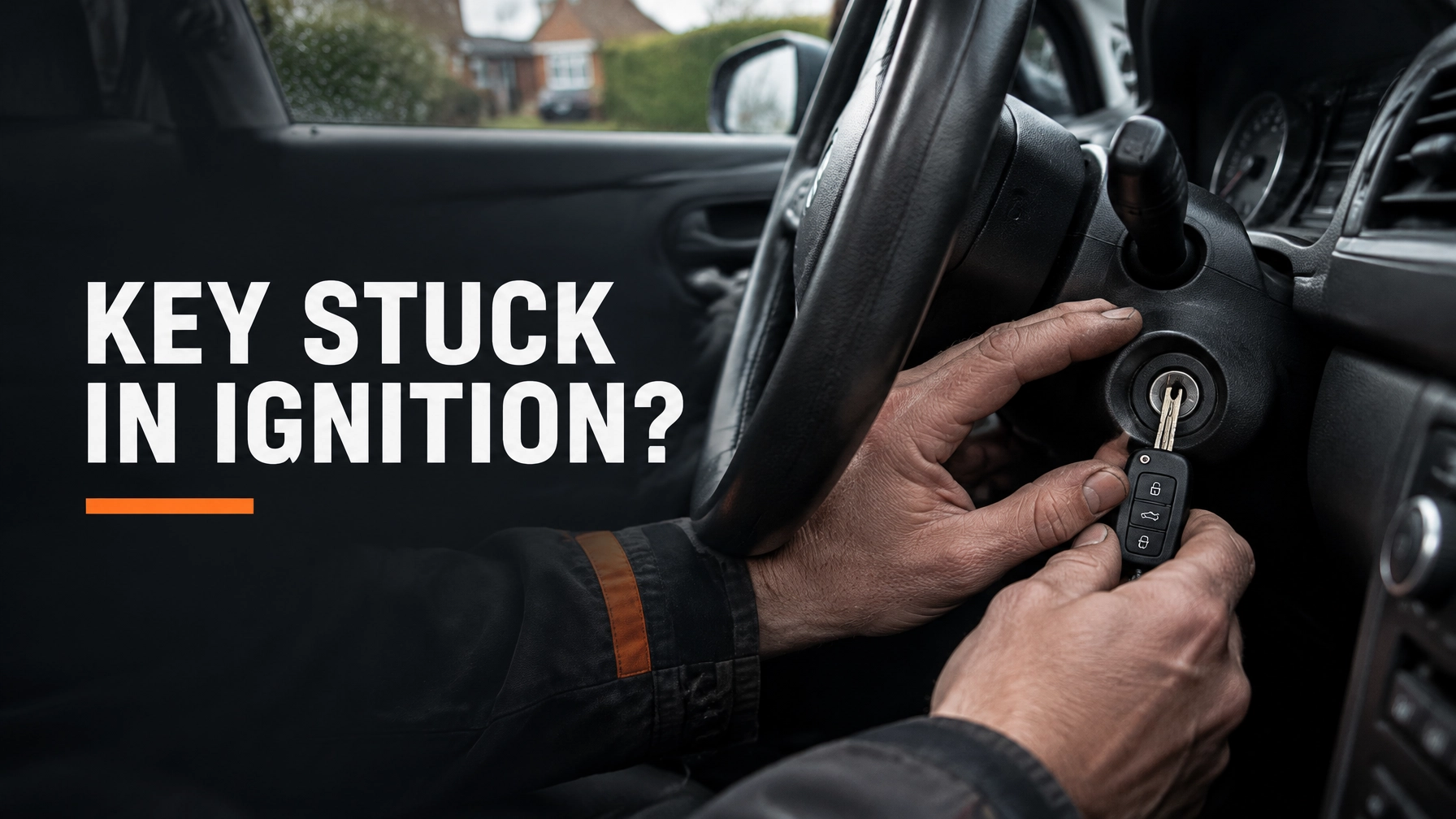
Don’t force it, don’t yank it, and don’t spray anything random into it. A car key stuck in ignition is often fixable, but forcing it can turn a small problem into an expensive one. A mobile auto locksmith can come to the car.
First: stop and check the simple things
Try these checks gently. If the key feels as if it is bending, or meets a hard stop, stop there.
- Check the steering lock. Hold the steering wheel and move it firmly from side to side while gently turning the key. One direction may have a little give. Don’t wrench the wheel or twist the key hard.
- Check the gear selector. If you have an automatic, make sure the car is fully in Park. If it is not, press the brake and move the selector firmly into Park. Some cars allow Neutral, but follow your vehicle’s instructions.
- Make sure you have the right key and it is inserted correctly. Check the key’s orientation and that it is fully in the barrel. If you have another key, try it gently.
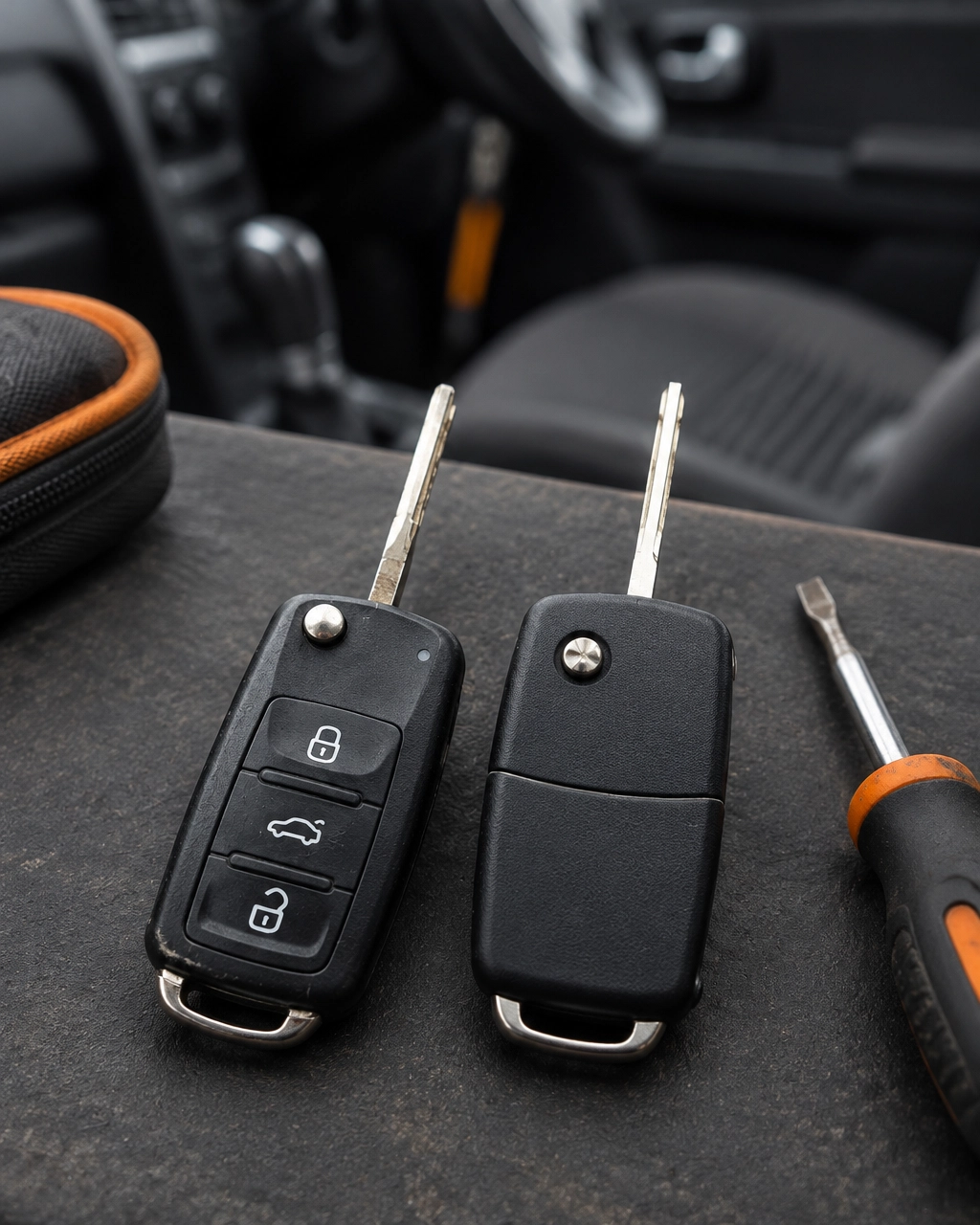
- Look at the key. Compare it with your spare if you have one. A bent blade, rounded ridges or obvious wear could be stopping it from moving the lock properly.
- Consider the fob battery. A flat fob battery usually won’t stop a traditional metal key turning in a mechanical ignition. But on a keyless or transponder-equipped vehicle, the car may not recognise the key or may not start. Check your vehicle handbook for its emergency key-recognition method.
If these checks don’t help, don’t keep repeating them with more force. The problem may be inside the ignition barrel or with the steering lock.
Why does a key get stuck or won’t turn?
A car key won’t turn for several possible reasons. The key and the ignition are mechanical parts that wear, while newer cars also rely on electronic security systems.
- A worn key or worn lock pins: Years of use can wear down the ridges on a key or the small parts inside the ignition barrel. The key may still fit but no longer move the lock cleanly. A cheap or poorly cut key can also wear differently from the original.
- Pressure on the steering lock: When the steering wheel is left turned against a kerb or under pressure, the lock can press tightly against its pin. The key may feel stuck until that pressure is eased.
- Dirt and grit in the barrel: Dust or debris can build up over time. That can make the key feel stiff, catch as it turns or stop it moving smoothly.
- A bent key or heavy keyring: A key can bend if it has been knocked, and a heavy bunch of keys hanging from the ignition can add strain over time.
- Damage after an attempted theft: Damage to the lock or surrounding parts can make the key difficult to insert, turn or remove.
- A failing ignition barrel: The mechanism may be worn or damaged internally. Sometimes it can be repaired; sometimes the barrel needs replacing.
- Cold weather: Cold can make an already worn or stiff mechanism more difficult to operate.
- An electronic key-recognition problem: A flat fob battery or a fault with the transponder or reader can stop the car recognising the key. That is different from a metal key physically jamming in the barrel.
Key out but the car won’t start?
A key that is stuck or won’t turn points towards a mechanical problem with the key, barrel or steering lock. If the key turns normally but the engine does not start, the issue may instead involve the immobiliser, transponder, vehicle battery or another starting fault.
Chris can check what is happening rather than guess. Instant Keys also provides car key programming across East Sussex.
What NOT to do
A little patience can prevent extra damage. Avoid these common mistakes:
- Don’t force or aggressively wiggle the key. The blade could bend or break in the barrel.
- Don’t use pliers to yank it out. Pulling hard can damage the key or ignition.
- Don’t pour WD-40 or oil into the barrel. It can trap grit and may damage parts of the ignition.
- Don’t try to drive with the key only halfway in. It may not be secure or operate the ignition properly.
- Don’t keep cranking the starter. Repeated attempts won’t free a jammed key and could make a separate starting problem harder to diagnose.
- Don’t remove the barrel yourself. Ignition parts can be connected to vehicle security systems, and taking them apart without the right knowledge can add damage.
- Don’t assume the whole ignition needs replacing. The fault may be a worn key, a repairable barrel or something else entirely.
If the key comes out but the car won’t start, that is usually a different fault from a jammed ignition barrel. It may relate to the immobiliser, transponder or battery.
How we fix it
Chris comes to your car and checks whether the fault is with the key, the barrel, the steering lock or the immobiliser. He explains what he finds and gives you the price before starting work.
Depending on the fault, the fix could be:
- A new key cut to replace a worn or damaged one.
- Repair or replacement of the ignition barrel or switch.
- A key programming issue that needs diagnosing.
Not every case needs a new ignition. When a repair is possible, it is usually cheaper than replacing the ignition. You can read more about our ignition repairs and replacement service.
Chris is SERMI-certified and DBS-checked, with authorised access to manufacturer security data and dealer-level diagnostics and programming. You deal directly with him from start to finish, not a call centre.
What does ignition repair or replacement cost?
The cost depends on the vehicle’s make, model, year and what has actually failed. As a guide, a standard transponder key cut and programmed may be roughly £80–£150. A replacement ignition barrel or switch is typically in the low hundreds, but the exact price varies by vehicle and job.
A main dealer can often cost significantly more, and you may also need to arrange recovery to get the car there. Chris will diagnose the fault and quote before starting, so you can decide what to do with the likely cost explained first.
Instant Keys has no call-out fee, no VAT and no weekend surcharge. The mobile service is typically with you in 30–40 minutes, subject to location and availability, and aims to provide same-day help across East Sussex.
Don’t make it worse next time
A few simple habits can help reduce wear:
- Keep your keyring light. Avoid hanging a heavy bunch of keys from the ignition.
- If you have a spare, use it occasionally and keep it in good condition.
- Deal with a key that feels stiff before it jams completely.
- Keep a spare car key, so you have a backup if your main key wears or fails.
Frequently asked questions
Can I drive with the key stuck in the ignition?
No, not safely. If the key is not fully inserted or operating correctly, you may not be able to control the ignition as intended. Don’t try to drive it; get the fault checked.
Is it cheaper to repair or replace an ignition?
A repair is usually cheaper if the barrel or switch can be fixed. It depends on the vehicle and the cause, so get a diagnosis and price before agreeing to work.
Will a locksmith come to my car for this?
Yes. Instant Keys is a mobile auto locksmith service, so Chris can come to the vehicle rather than asking you to bring it to a workshop. Call to discuss your location and the fault.
My key won’t turn at all. Is it the battery?
If it is a traditional metal key in a mechanical ignition, a flat fob battery usually will not stop the key turning. If the key turns but the car does not recognise it or start, the battery or another electronic fault may be involved.
Do you cover my area?
Instant Keys covers Hastings and East Sussex, including Eastbourne, Hailsham, Bexhill, Rye, Seaford, Crowborough, Battle and St Leonards. Call to check availability and an estimated arrival time.
If your key is stuck, don’t force it. Call or WhatsApp Chris on 07856 696949 for a diagnosis and price. There is no call-out fee or VAT, and Instant Keys provides mobile service across Hastings and East Sussex.


